A practical path to tax residency with 0% tax on foreign income.
For digital nomads, taxes eventually become one of the biggest questions of the lifestyle.
Once you stop living full-time in your home country, the natural question becomes: where do you pay taxes?
One country that has quietly become popular among remote workers and location-independent entrepreneurs is Paraguay.
The reason is simple.
Paraguay operates under a territorial tax system, which means foreign-sourced income is taxed at 0%.
If structured correctly, this can allow digital nomads and remote workers to legally reduce their tax burden dramatically.
Why Paraguay?
Paraguay is not the first place most people think of when considering residency options. It is a relatively quiet country in South America, with a population of about seven million and a capital city, Asunción, that feels more like a large town than a major metropolis.
But what Paraguay lacks in global attention, it makes up for in tax simplicity.
The country taxes income based on where it is generated, not where the individual lives.
This means:
Income generated inside Paraguay is taxed
Income generated outside Paraguay is generally not taxed
For remote workers earning income from foreign companies or clients, this can be extremely attractive.
Getting Residency in Paraguay
Obtaining residency in Paraguay is relatively straightforward compared to many countries.
However, Paraguay bureaucracy is famously chaotic, and navigating the process alone can be frustrating.
Most people work with local agencies that handle the paperwork and guide you through the process.
One example is:
Paraguay Pathways
https://paraguaypathways.com/
Agencies like this typically charge around $2,000 to $3,000 to handle the residency process.
Personally, this is the route I took. I used Paraguay Pathways to obtain my temporary residency, which is renewable every two years, along with my Cédula, Paraguay’s national ID card.
The process is fairly simple in theory but slow in practice. Due to government bureaucracy, the full process can take three to five months from start to finish.
What the Residency Provides
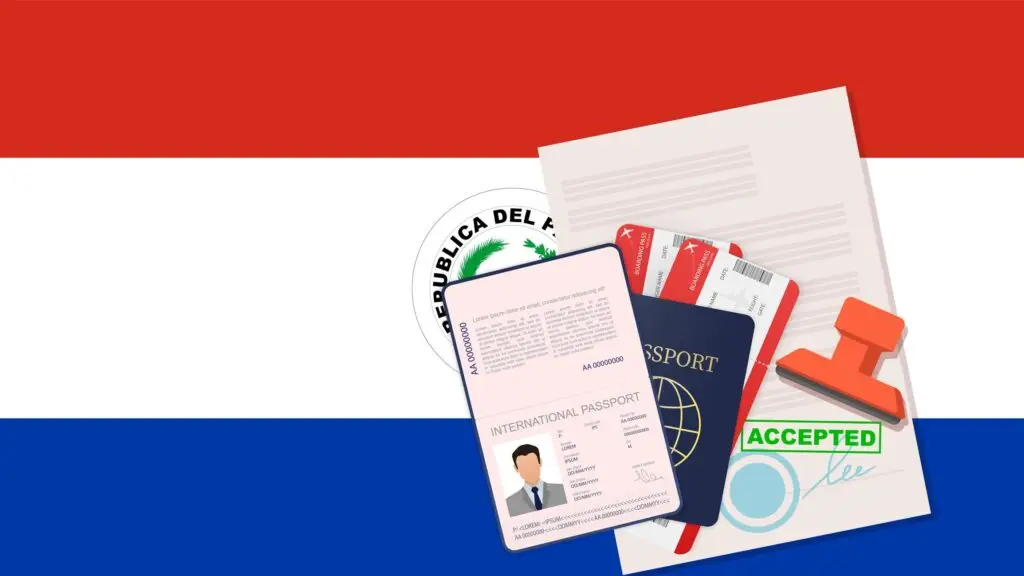
Once approved, you receive:
Temporary residency status
A Paraguayan national ID card (Cédula)
The ability to open local bank accounts
A legal tax residence in Paraguay
The residency can later be converted into permanent residency if desired.
Many residency service providers also offer additional services, such as:
Managed mailing addresses
Tax assistance
Help opening financial accounts
These services can be useful if you need to demonstrate residency for banking or compliance purposes.
Banking and Financial Setup
One challenge many digital nomads face is banking access.
If you are trying to cut tax ties with your home country, you may also need to reduce residential ties, which can include things like bank accounts.
In some cases, maintaining strong financial ties to your home country can complicate tax residency claims.
Residency agencies in Paraguay often help with this by providing:
A legal address for KYC purposes
Documentation confirming residency
Assistance opening international bank accounts
These addresses can be used to open accounts with offshore financial institutions such as:
Dukascopy (Switzerland)
Xapo Bank (Gibraltar)
Paraguay’s domestic banking system is actually fairly stable by South American standards, but it does have limitations.
Transaction limits are often lower, and international connectivity can be less convenient than offshore banking options.
For this reason, many nomads use a mix of international banks and offshore financial services.
My Personal Setup
In my case, the setup looks like this.
I registered a Wyoming LLC in the United States, which operates as a pass-through entity.
Wyoming is commonly used for this because the state has:
No corporate income tax
Simple reporting requirements
Strong privacy protections
My clients and employers pay my company directly into a US business bank account registered under the LLC.
From there, I pay myself as a contractor into my personal bank account in Switzerland.
This account is registered under my Paraguay residency, using my Paraguayan address.
This structure allows income to flow through my business while maintaining a clear separation between:
the operating company
personal banking
tax residency
My Wyoming lawyer or agent handles corporate filings for the LLC, while the Paraguay agency handles my local residency requirements.
They also provide a managed address and tax support services for around $500 per year.

The Tax Outcome
The result of this setup is relatively simple.
I no longer file income tax in Canada
My LLC has no corporate tax in Wyoming
Paraguay taxes 0% on foreign income
For remote work income generated outside Paraguay, the effective tax rate is essentially zero.
In my case, this structure saves well over $50,000 per year compared to what I would otherwise owe under Canadian tax rules.
Important Considerations
This type of structure is not a magic trick or loophole.
Tax residency rules vary widely between countries, and it is important to properly sever tax residency with your home country if that is your goal.
Many countries apply tests based on residential ties, such as:
physical presence
housing
banking relationships
family ties
If these ties remain strong, tax authorities may still consider you a tax resident.
Because of this, it is strongly recommended to consult with qualified tax professionals when designing an international structure.
Final Thoughts
Paraguay has quietly become one of the most attractive residency options for digital nomads and remote entrepreneurs.
Its territorial tax system, relatively accessible residency process, and stable financial environment make it a compelling option for those looking to legally reduce their tax burden.
The process does involve bureaucracy and patience, but once completed, it can provide a straightforward foundation for a location-independent financial setup.
For nomads who are serious about optimizing their tax situation, Paraguay is definitely worth exploring.